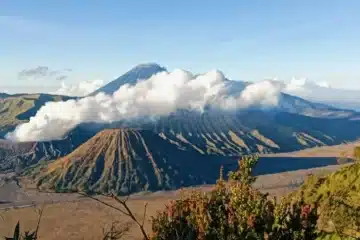
Mount Ijen is known as one of Indonesia’s most iconic natural destinations, famous for its rare Blue Fire phenomenon and the largest acidic crater lake in the world. This unique beauty attracts many travelers, including international visitors, who are willing to start hiking before dawn to witness the view. However, behind its stunning scenery, Mount Ijen also presents serious risks in the form of sulfur gas exposure. A lack of understanding about this danger can affect health and safety. For this reason, it is important for you to understand why using a gas mask is essential when hiking Mount Ijen.
The Danger of Sulfur Gas at Mount Ijen
Mount Ijen is an active volcanic crater that naturally releases sulfur gas, mainly sulfur dioxide (SO₂). This gas is often invisible, but it has a strong smell and can affect the body in a short time, especially when visitors are inside the crater area.
Exposure to sulfur gas may cause eye and throat irritation, shortness of breath, coughing, and dizziness. The risk becomes higher when wind direction suddenly changes or when visitors are close to the Blue Fire area and sulfur mining routes, where gas comes directly from the crater vents. For you who are not familiar with active volcanic environments, the effects of sulfur gas can feel stronger and faster.
Why a Gas Mask Is Absolutely Necessary
A gas mask is not just an extra item, but a key safety tool when hiking Mount Ijen. Sulfur gas cannot be filtered by cloth masks, medical masks, or standard N95 masks, as those types of masks are designed only to block dust and small particles, not toxic volcanic gases that are present around the crater.
A proper gas mask is specifically designed to protect the respiratory system from harmful gases that cannot be seen but can be felt quickly when inhaled. For international travelers, using a gas mask is even more important because the body is not accustomed to extreme volcanic conditions. With the right gas mask, you can breathe more comfortably, reduce health risks, and stay focused on enjoying the hiking experience without unnecessary discomfort or danger.
Recommended Types of Gas Masks
Not all masks are suitable for Mount Ijen. Choosing the right gas mask plays a major role in the level of protection you receive.
Several recommended options include respirators with activated carbon filters designed to absorb sulfur gas, masks with a tight seal around the nose and mouth to prevent gas from entering through gaps, and industrial or volcanic gas masks made for environments with toxic gas exposure. Ordinary masks should be avoided because they do not provide adequate protection.
How to Use a Gas Mask Correctly
Having a gas mask is not enough if it is not used properly. Incorrect use can reduce its effectiveness and put you at risk.
Make sure the gas mask fits tightly over your nose and mouth without any gaps. Wear it before entering areas with thick smoke or before descending toward the Blue Fire zone. Check that the straps are secure and that the filter is installed correctly.
During the hike, do not remove the gas mask even if the gas seems lighter, as wind direction can change at any time. Staying disciplined in wearing your gas mask plays an important role in protecting your safety.
Safety Tips for International Travelers
In addition to wearing a gas mask, there are several safety tips you should follow, especially if you are visiting from abroad.
Always follow the instructions of a local guide who understands the crater conditions and gas movements. Avoid staying too long near the Blue Fire area, where gas concentration is usually higher. Pay attention to wind direction and avoid standing in paths where sulfur smoke is carried.
You should also prepare supporting equipment such as a headlamp for early morning hiking, enough drinking water, and warm clothing, as temperatures at Mount Ijen can be very cold. Good preparation helps reduce risks and ensures a safer journey.